EQUINE-ASSISTED THERAPY
How it Works
EQUINE-ASSISTED THERAPY
Why Horses Help People with Trauma
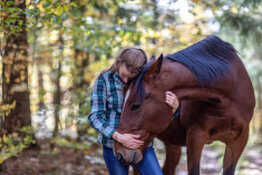
Trauma often disrupts the nervous system, leaving people stuck in patterns of hyperarousal, shutdown, or emotional disconnection. Horses naturally model presence, attunement, and regulation, and they respond to humans in ways that help clients notice and adjust their internal states.
Key therapeutic mechanisms include:
- Immediate, honest feedback Horses mirror emotional states—if a client is anxious, withdrawn, or tense, the horse’s behaviour shifts. This helps clients see their internal experience externally.
- Co‑regulation Horses often calm when humans soften their breath, slow their movements, or become more grounded. Clients learn regulation through embodied practice rather than cognitive instruction.
- Rebuilding trust and boundaries Trauma often damages a person’s sense of safety. Horses require clear, respectful boundaries and respond positively when humans communicate them. This helps clients practice safe relational patterns.
- Empathy and emotional connection Horses show deep empathy and attunement, especially with people experiencing grief, fear, or sadness. This can help clients reconnect with emotions they’ve avoided or numbed.
- Embodied, present‑moment awareness Horses live fully in the “here and now,” inviting clients out of rumination or dissociation and into sensory, grounded experience.
HOW THERAPY WORKS
How EAT Supports Trauma Recovery
Equine‑assisted therapy does not push for trauma disclosure. Instead, it works through somatic, relational, and experiential processes that gently support healing.
Common trauma‑related benefits include: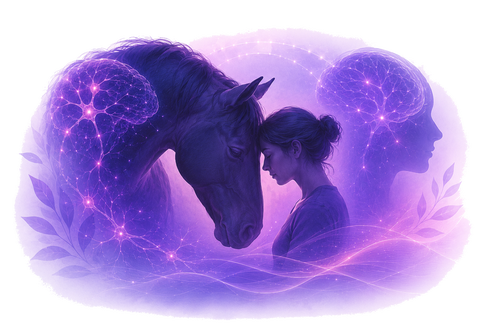
- Reduced anxiety, hypervigilance, and dissociation
- Increased self‑regulation and ability to stay grounded
- Improved self‑esteem, confidence, and agency
- Strengthened ability to set and maintain boundaries
- Enhanced emotional awareness and recognition of triggers
- Greater sense of connection, belonging, and safety
What an EAT Session Typically Looks Like
- A grounding or body‑awareness exercise followed by grooming
- Observing horses in their natural environment
- Meeting and greeting horses at liberty and grooming them
- Leading exercises
- Task‑based activities (e.g., navigating obstacles together)
- Reflection and integration with the therapist
Summary Table
Aspect
How It Helps Trauma Survivors
Somatic regulation
Helps clients calm their nervous system through embodied interaction with horses.
Boundary practice
Horses respond clearly to personal space, helping clients learn safe relational boundaries.
Emotional awareness
Horses mirror emotional states, making internal experiences visible.
Trust building
Non‑judgmental interactions help clients rebuild trust safely.
Present‑moment grounding
Horses’ attunement encourages mindfulness and reduces dissociation.
The Core Neuroscience of Equine‑Assisted Therapy
The neuroscience behind equine‑assisted therapy (EAT) is one of the reasons it’s so effective for trauma treatment. At its core, EAT works because horses influence the human nervous system in real time, helping people shift out of trauma‑based states and into regulation, safety, and connection.
Below is a clear, structured explanation of how and why this happens, grounded in current neuroscience.
1. The Polyvagal System: Horses Help Regulate the Vagus Nerve
Trauma often traps people in sympathetic arousal (fight/flight) or dorsal vagal shutdown (freeze/collapse). Horses naturally invite humans into the ventral vagal state, the system responsible for:
- safety
- social engagement
- connection
- calm focus
Horses do this because they are highly attuned mammals whose nervous systems respond instantly to human breathing, posture, and energy. When a horse relaxes—soft eyes, lowered head, slower breathing—the human nervous system often mirrors it through co‑regulation.
2. Horses Provide Real‑Time Biofeedback
Humans often can’t feel their own dysregulation, especially after trauma. Horses make it visible.
If a person is tense, dissociated, or anxious, the horse may:
- step away
- freeze
- become alert
- refuse to approach
When the person softens their breath or grounds themselves, the horse’s behaviour shifts immediately. This creates a somatic feedback loop that strengthens interoception—the brain’s ability to sense internal states.
Improved interoception is linked to reduced PTSD symptoms.
3. The Limbic System: Emotional Processing Without Overwhelm
The limbic system (amygdala, hippocampus, etc.) governs emotional memory and threat detection. Horses help modulate limbic activation by providing:
- non‑judgmental presence
- predictable behaviour
- rhythmic movement
- sensory grounding
This reduces amygdala hyperactivity and supports the hippocampus in forming new, safe associations.
4. Mirror Neurons: How Horses Teach Regulation
Humans have mirror neurons that fire both when we act and when we observe another being acting. Horses’ calm, coherent behaviour activates these neurons, helping clients:
- slow down
- breathe more deeply
- soften their posture
- shift nto relational engagement
This is why simply standing near a regulated horse can change a person’s internal state.
5. Somatosensory Integration
Trauma often disrupts the brain’s ability to integrate sensory information. Working with horses involves:
- touch
- movement
- proprioception
- balance
- spatial awareness
These sensory inputs activate the somatosensory cortex and cerebellum, helping repair fragmented trauma responses.
6. Oxytocin Release
Safe connection with animals increases oxytocin—the hormone associated with bonding, trust, and reduced fear. Oxytocin:
- lowers cortisol
- reduces hypervigilance
- increases feelings of safety
- supports social engagement
Putting It All Together: The Trauma‑Healing Mechanism
Equine‑assisted therapy works because it simultaneously engages:
- the body (somatic regulation)
- the brain (limbic calming, interoception)
- the nervous system (polyvagal activation)
- the relational system (attachment and trust)
Summary Table
Neuroscience Concept
How Horses Support It
Polyvagal regulation
Horses help shift clients into ventral vagal safety.
Interoception
Horses provide external cues that strengthen internal awareness.
Limbic calming
Predictable equine behaviour reduces amygdala activation.
Mirror neurons
Clients mirror the horse’s calm, coherent state.
Oxytocin release
Safe connection increases trust
Meet the Team